
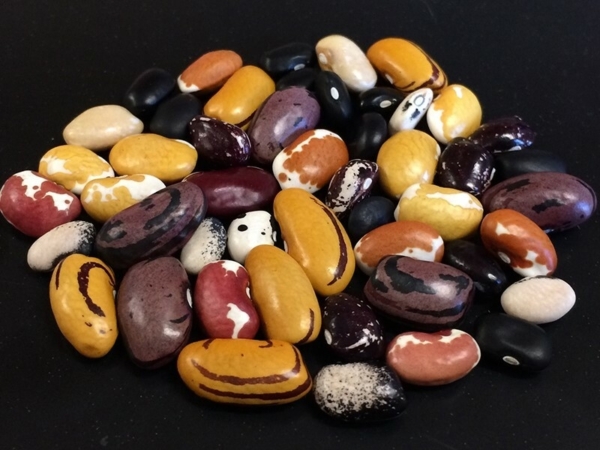
Researchers at the University of California, Davis, have identified a genetic mutation that helped domesticate common beans, offering insights that could help plant breeders develop improved varieties with traits suited to modern agricultural challenges.
The study, published in Molecular Plant, identifies the PvMYB26 gene as a key regulator of pod shattering, a trait that allows wild beans to disperse seeds but complicates harvesting. The findings also provide new evidence that common beans were first domesticated in west-central Mexico and suggest a possible third domestication event in Ecuador and northern Peru.
Travis Parker, assistant professional researcher in the UC Davis Department of Plant Sciences, led the research. Burcu Celebioglu, a postdoctoral researcher in Parker's lab, was the paper's first author. Paul Gepts, professor emeritus and a longtime bean expert, also contributed to the study.
Understanding the genetic changes that enabled domestication can help breeders identify the genes responsible for important crop traits and understand how those traits interact. This knowledge can guide efforts to improve modern varieties while maintaining desirable characteristics.
Genetic Insights Could Guide Crop Improvement
The PvMYB26 gene regulates lignin production, which contributes to the stiffness of plant structures, including seed pods. In wild beans, high lignin levels create tension in mature pods, causing them to split open and scatter their seeds. Although this mechanism helps wild plants reproduce, it makes harvesting difficult.
A natural mutation that arose thousands of years ago reduced lignin production in bean pods, allowing more pods to remain intact at maturity. People could then collect and plant the seeds, helping establish the nonshattering trait in domesticated beans.
Researchers found that nearly all domesticated bean samples carried the mutated version of PvMYB26, while nearly all wild samples retained the original form. Domesticated varieties with the mutation produced about half as much lignin in their pods as wild varieties, reducing the forces that cause shattering.
Identifying the gene and understanding its function provide breeders with a clearer picture of the genetic mechanisms behind a critical domestication trait. This knowledge can help researchers investigate how specific genes influence crop performance and how traits can be incorporated into breeding programs.
Common beans are an important source of protein and other nutrients, particularly in Latin America and parts of Africa. With protein content reaching 30%, they also offer an alternative to animal protein. Developing improved bean varieties could help support a nutritious food supply while limiting the need for additional agricultural inputs.
Wild Relatives May Expand Breeding Options
To investigate the origins of the nonshattering trait, researchers analyzed 327 samples of wild and domesticated beans collected across Mexico and Central and South America. The study identified wild beans from eastern Jalisco and northern Michoacan, Mexico, that were genetically similar to domesticated beans but lacked the key PvMYB26 mutation.
The findings support west-central Mexico as the original site of common bean domestication in Mesoamerica. Researchers also found a different mutation in the same gene among beans from the southern Andes of Argentina and Bolivia, indicating that the trait developed independently in two geographically distant domestication regions.
A third mutation appeared in beans from Ecuador and northern Peru, raising the possibility of another domestication event. Researchers said these plants may later have crossed with other domesticated beans, complicating efforts to trace their history.
For plant breeders, these findings highlight the value of studying the genetic diversity found in wild relatives and geographically distinct bean populations. Such diversity can help researchers better understand the origins of useful traits and identify genetic variations for further investigation.
The discovery of multiple mutations affecting the same gene also illustrates how different genetic changes can produce similar outcomes. Understanding those pathways could help breeders evaluate genetic resources and make more informed decisions when developing new varieties.
Genomic Research Supports Future Breeding
The study builds on decades of research into bean domestication and uses genomic sequencing and comparative analysis to connect genetic variation with observable traits. The research team included scientists from UC Davis, North Dakota State University and the National Center for Genome Resources.
The findings support earlier work by Gepts, who proposed more than 40 years ago that Jalisco was the earliest site of bean domestication in Mesoamerica. Later studies suggested a location farther south in Mexico, in what is now Oaxaca state. The new analysis strengthens the case for Jalisco while providing additional insight into domestication in South America.
The research received partial funding from the Agriculture and Food Research Initiative, part of the U.S. Department of Agriculture's National Institute of Food and Agriculture, and the Kirkhouse Trust SCIO.
Parker received the Distinguished Achievement Award from the international Bean Improvement Cooperative at its 2025 biennial meeting. He also earned first place in the early-career poster presentation category at the National Association of Plant Breeders' annual meeting in 2025.
Source: University of California, Davis, "Help for Bean Breeders: Gene Found that Controls Seed Pod Shattering"