

Rigid, reusable seed boxes have become an increasingly important part of the seed supply chain, offering greater product protection, safer handling and more efficient transportation. Their growing use, however, has also introduced new considerations involving fleet size, warehouse space, return transportation, maintenance and asset management.
In the previous issue of Seed Today, Matt Dannenfeldt, founder and CEO of Seedbox Solution, examined how real-time visibility and connected technology are changing seed logistics. Continuing that conversation, he discusses how reusable packaging and rental models are reshaping the physical side of the supply chain, what companies should consider when choosing between renting and owning boxes, and why monitoring the seed inside the container may represent the industry’s next major opportunity.
Seed Today: How has the physical side of seed logistics changed in recent years, particularly around packaging, storage, transportation and returns?
Matt: Farmers increasingly prefer seed to be shipped and stored in rigid, reusable boxes because they offer lower freight costs, cleaner operations and safer handling. As adoption has increased, seed companies have had to rethink the physical logistics of their operations, including adding warehouse capacity and expanding their seed box fleets.
These changes are helping companies meet customer expectations while maintaining efficient product movement from production facilities to the farm.
ST: What pressures are causing seed companies to reconsider traditional packaging and handling models?
M: It has been a difficult year across agriculture, with rising costs for everything from equipment and labor to fuel. Packaging and seed boxes are no exception.
Unprecedented increases in resin prices have raised the cost of purchasing and maintaining seed box fleets. Higher fuel prices have made it more expensive to retrieve boxes from dealers and other locations, while rising construction costs have made it more difficult to add storage space.
Because reusable seed box systems have become important to farmer satisfaction, demand remains strong. Working with a third-party service provider can relieve seed producers of some of the burden of purchasing, storing and managing their own fleets.
ST: Reusable seed box systems have gained traction across the industry. What operational problems can they solve that traditional packaging often cannot?
M: Compared with a one-way woven bag, rigid seed boxes provide better product protection and safer handling throughout the supply chain. Full stop.
The boxes are extremely durable and can be handled, stacked, stored and shipped safely. Their durability and reusability allow them to deliver value over a long service life.
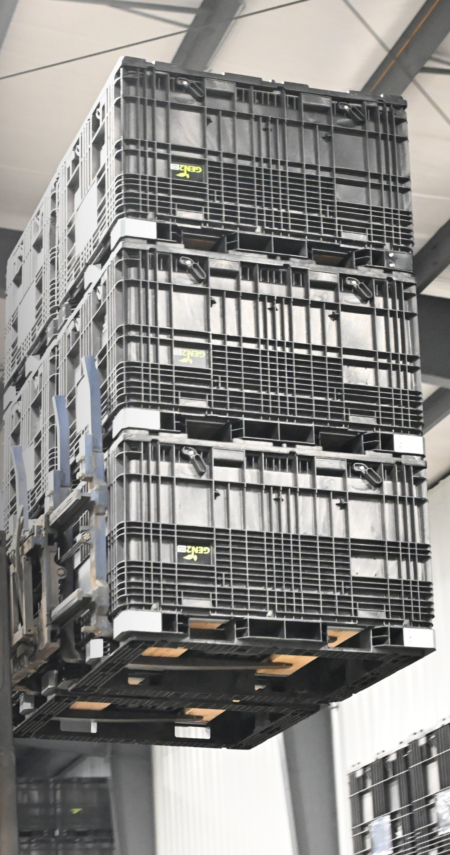
ST: How do reusable systems affect transportation efficiency, particularly when empty or collapsed containers must be moved back through the supply chain?
M: After purchasing seed boxes, the largest ownership expense is moving them through the supply chain. With its high cubic capacity and freight-optimized design, the ORBIS-manufactured GEN250 can significantly reduce that cost by allowing 50% more collapsed boxes to fit on each truckload.
ST: Rental models are becoming more common in seed logistics. What advantages can renting offer compared with owning seed handling assets outright?
M: As I mentioned, the costs of purchasing, moving and servicing seed boxes continue to rise. The Seedbox Solution rental program helps insulate producers from those uncertainties.
We have established long-term rental rates that allow companies to predict their per-unit packaging costs years in advance. Companies also avoid tying up capital or purchasing boxes they did not anticipate needing.
ST: What should companies consider when deciding whether to own, rent or use a hybrid model for seed boxes and other handling assets?
M: Historically, companies have gravitated toward owning their fleets. However, changing market conditions, seasonal fluctuations in demand and increasing pressure to control costs are prompting more companies to consider rental programs as a way to reduce complexity and improve flexibility.
Companies and people like to own their assets. We understand that. However, if I were a seed company outsourcing a portion of production to a third-party conditioner, I would also outsource the boxes needed for that part of the business. It is simpler and more cost-effective than sending company-owned assets to a third-party facility.
I would also consider renting boxes to support growth until I knew the increased demand would continue for many years. Too many companies have purchased boxes during peak years only to carry those surplus assets on their balance sheets after demand declined.
Companies should also examine the competing uses for their capital. Every dollar spent purchasing a box is a dollar that cannot be spent marketing, selling or licensing products. How do seed companies increase their value? In my view, it is not by owning more plastic containers.
ST: How do washing, maintenance, repair and fleet management contribute to the long-term value of reusable seed box systems?
M: Those services are essential to keeping a reusable seed box fleet efficient, safe and durable. However, doing the work correctly and efficiently requires a full-time effort. Producers are increasingly looking to outsource these activities so they can focus on their core business.
ST: Sustainability is becoming a greater priority throughout agriculture. How can packaging and logistics decisions reduce waste and improve resource efficiency?
M: Reusable seed boxes reduce the number of one-way bags and single-use pallets that end up in landfills. We are all stewards of this planet, and that alone has value.
An even larger source of waste occurs when millions of units of processed and packaged seed — particularly soybeans — are sent into the trade but never planted. The seed is returned, creating additional transportation and handling costs, and may ultimately be discarded.
About 15% of the boxes sent to dealers or distribution locations are ultimately returned with unsold seed. We developed BOXIQ, an inventory and quality monitoring system for seed stored in rigid boxes, to help reduce that percentage. A reduction of even 1% to 2% could keep millions of dollars’ worth of product from being handled multiple times and ultimately incinerated.
ST: What lessons can the seed industry learn from sectors that have already adopted reusable packaging or pooled-asset models?
M: The opportunity is similar to the shift that occurred among consumer packaged goods companies shipping products to retailers. Instead of every company owning and managing its own pallet fleet, third-party pooling providers created shared systems that improved efficiency, increased asset utilization and reduced waste across the supply chain.
Companies could then focus on their brands, products and customers while relying on standardized, reusable platforms to move goods. Today, reusable pallet pools help streamline operations, reduce total system costs and support sustainability goals through durable assets that remain in circulation for years. The benefits extend beyond individual companies and create value across the supply chain.
The seed industry is beginning to recognize a similar opportunity. By embracing a shared reusable packaging model, seed producers can collectively reduce packaging waste, improve asset utilization and lower supply chain costs. The result is a more efficient and sustainable system that benefits manufacturers, distributors and, ultimately, farmers. That is the power of industrywide collaboration.
ST: Looking ahead, how do you expect seed packaging, rental models and reusable logistics systems to continue evolving?
M: In my view, the future will increasingly involve monitoring the product on or inside the packaging, not just the packaging itself.
Monitoring technology can give producers real-time insight into seed inventory, sell-through rates, box locations and dwell time. As a packaging and logistics provider, we must deliver solutions that help our clients sell more seed while protecting its quality. Operational cost savings alone will not be enough.