
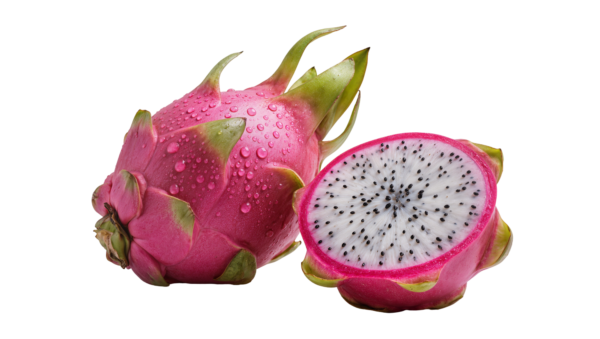
Dragon fruit is showing strong potential as a high-value crop for India's island farmers, with successful cultivation trials at the Central Island Agricultural Research Institute demonstrating rapid plant growth, early fruit production and long-term commercial prospects.
The climbing cactus, Hylocereus spp., is valued for its nutritional properties, striking appearance and sweet flesh. Researchers established five dragon fruit collections at the institute's experimental farm using trellis systems designed to support vines that can remain productive for up to 20 years.
Scientists primarily used concrete poles topped with square support structures to train the vines for fruit production. Because heavy rainfall frequently causes soil erosion on the islands, concrete square bases were constructed to retain the growing medium around each support. Researchers also evaluated a lower-cost alternative using iron poles with recycled tires serving as the top support structure.
Plants were spaced 3 meters by 3 meters and grown in soil enriched with farmyard manure, coir compost, vermicompost and biofertilizers. Four rooted cuttings were planted around each support in June 2015.
The crop established quickly, with vines averaging 8.2 centimeters of growth per week. Since rainfall is distributed across eight months of the year, irrigation was generally unnecessary except during the dry season, when drip irrigation maintained adequate soil moisture on alternate days. Weed mats helped suppress weeds while conserving soil moisture.
Within about eight months of planting, the vines formed dense canopies over the trellis structures. Flowering began in both red-fleshed and white-fleshed selections in March 2016, approximately nine months after planting. Fruit reached harvest maturity 25 to 35 days after flowering, with harvest timing adjusted depending on whether fruit was intended for local sales or longer-distance transport.
The plantation has been managed using organic production practices. While trellis construction represents a significant initial investment, researchers noted that maintenance costs decline after establishment, while productive vines can continue yielding fruit for up to two decades. Commercial production can begin in the second year after planting.
Dragon fruit also offers favorable market potential. Imported fruit currently sells in the islands for Rs 200 to Rs 250 per kilogram, reflecting strong consumer demand in both local and international markets. Researchers said the crop could provide a profitable diversification opportunity for farmers and entrepreneurs interested in medium- to large-scale production.
The institute has also focused on grower education. A field day held Aug. 9, 2016, attracted 52 farmers from villages across South Andaman, where participants observed the demonstration planting, sampled organically produced dragon fruit and learned production practices. The event generated strong interest in the crop and its commercial potential among local producers.
Source: Indian Council of Agricultural Research, "Dragon fruit – a potential high value crop for diversification in Bay Islands"